

To choose a backpacking tent, match three things to your trip: how many people and items must fit inside, how much weight you are willing to carry, and the worst weather you expect to meet. Everything else, from pole design to door count, is a trade-off among those three priorities.
We based this guide on manufacturer specifications, published gear standards, and common trail practice. It walks through shelter types, the features that matter most, sizing, setup, and the mistakes that lead to a miserable night, then points you to our roundups when you are ready to compare specific options.
Match the Tent Type to Your Trip
Backpacking tents fall into a few broad families, and each one solves a different problem. The right choice depends less on marketing language and more on where you sleep and how far you walk to get there.
Freestanding Dome and Semi-Freestanding Tents
These use poles that hold the structure upright on their own, so you can pitch them on rock, sand, or hard-packed ground where stakes barely bite. They are the most forgiving option for beginners and for routes with uncertain campsites.
Trekking Pole and Tarp Shelters
Ultralight shelters often skip dedicated poles and rely on trekking poles, trees, or stakes for structure. They save weight but demand more skill and more patience when the ground is poor.
Tunnel and Single Wall Designs
Tunnel tents offer generous interior space for their weight and handle wind well when pitched correctly, though they need solid stake placements. Single wall shelters cut weight by combining the fly and canopy, which means condensation management becomes your job.
If you want to compare roomy options for basecamps and longer stays, our tunnel tents roundup covers that category in detail.
Capacity and Interior Space
Tent capacity numbers describe how many sleeping pads fit side by side, not how many adults will be comfortable with gear. A two person tent is often ideal for one person plus a pack, and a three person tent can work well for two people who want elbow room.
Look at floor dimensions, peak height, and the number of doors and vestibules. Two doors and two vestibules reduce middle-of-the-night climbing over your partner, while a single door saves weight and cost.
| Sleepers | Typical Use | Trade-Off |
|---|---|---|
| 1 | Solo trips with gear inside | More weight than a bivy or tarp |
| 2 | Couples or solo with lots of gear | Tight for two adults plus packs |
| 3 | Two adults plus a dog or child | Heavier and bulkier to carry |
| 4 or more | Groups and families | Best for short approaches, not long miles |
For dedicated couples and solo hikers, our 2 person tents roundup focuses on that sweet spot. Larger groups can start with our 4 person tents and 5 person tents roundups.
Weight and Packed Size
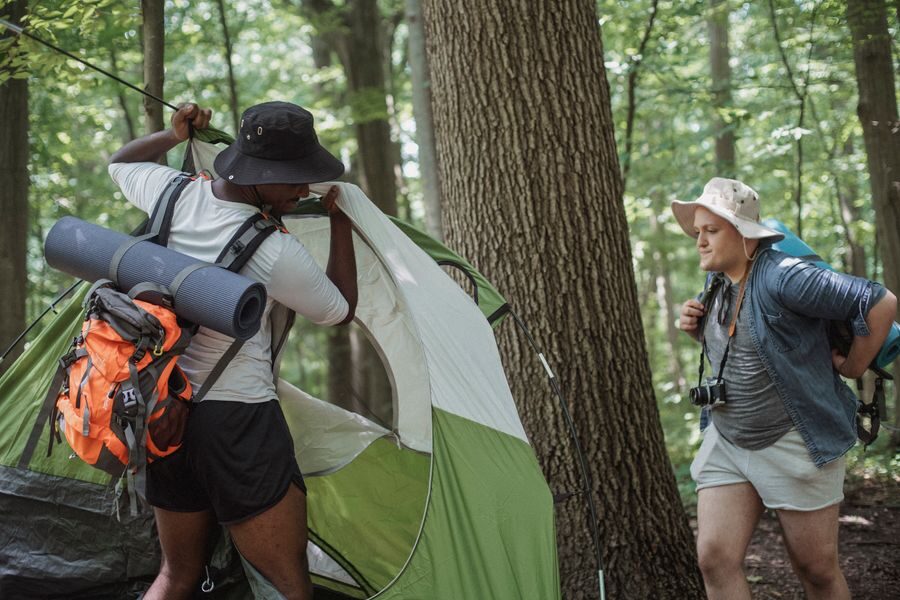
Weight is the feature you feel on every step, so treat it as a primary filter rather than an afterthought. Manufacturers usually list trail weight (what you carry) and packaged weight (including stuff sacks and extras), and the difference can be meaningful.
Divide total tent weight by the number of people sleeping in it to get a fair comparison. A heavier tent shared by two people may cost each of you less effort than a lighter solo shelter.
- Split the load: carry poles, fly, and body in different packs for group trips.
- Packed size matters for small packs and bikepacking setups.
- Ultralight fabrics save ounces but usually cost more and need gentler handling.
- A footprint or groundsheet adds weight but can extend floor life.
If you plan to camp near the car or paddle to your site, weight matters far less, and our family camping tents roundup covers roomier shelters built for that style.
Weather Protection and Materials
Water resistance comes from two numbers: the hydrostatic head of the fly and floor fabric, and the quality of the seams and zippers. Higher hydrostatic head ratings resist more water pressure, but a well-sealed tent with modest fabric often outperforms a poorly sealed one with premium fabric.
Look for taped or sealed seams, storm flaps over zippers, and a bathtub floor that curves up at the edges. Ventilation matters just as much as waterproofing, because trapped moisture from your breath and body makes a dry tent feel wet.
- Double wall designs manage condensation better in humid or cold conditions.
- Mesh panels improve airflow but can feel drafty in winter.
- Adjustable vents let you balance airflow and warmth.
- A full coverage fly protects against wind-driven rain.
Over time, factory water repellent finishes wear off. Reapplying a treatment is normal maintenance, and our tent waterproofing sprays roundup explains the options.
Setup, Staking, and Site Selection
Practice pitching your tent at home before your trip, ideally in wind or light rain, so setup is boring when it matters. Color-coded poles, clips instead of sleeves, and a clear sequence reduce frustration in bad conditions.
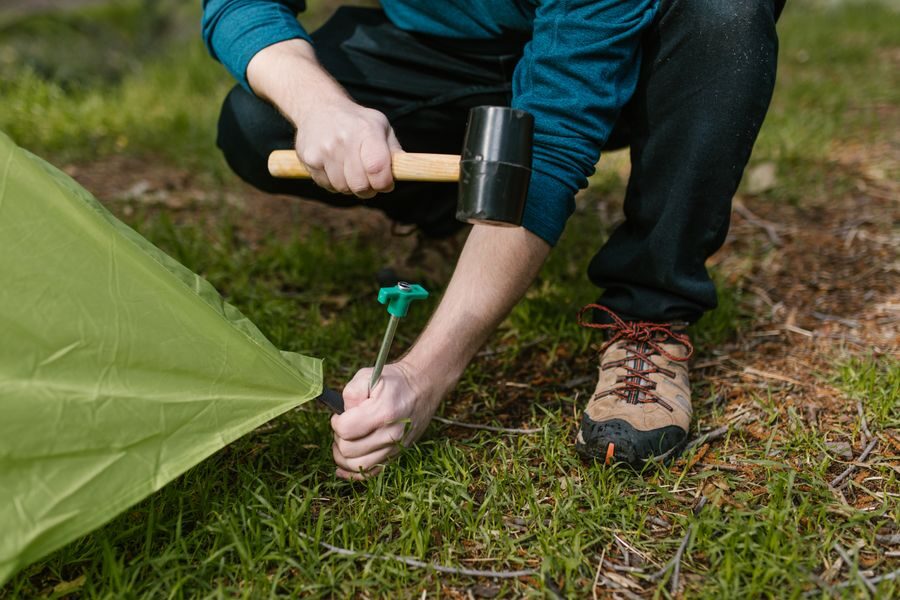
Stakes and guy lines are part of the shelter system, not accessories. A tent that shrugs off wind on a calm day can collapse when gusts hit if it is not anchored and tensioned properly.
- Pick a site that is level, clear of dead branches, and away from low spots where water pools.
- Orient the tent so the lowest corner faces downhill and the door faces away from prevailing wind.
- Stake the corners first, then tension the fly and add guy lines.
- Check that the rainfly does not touch the inner canopy, since contact can wick water inside.
Rules for camping locations vary widely by land manager and season, so check current regulations for your specific area before you go.
Common Buying Mistakes to Avoid
Most tent regrets come from shopping by headline number instead of by trip. Avoiding a few predictable errors will save you money and discomfort.
- Buying capacity for sleeping bodies but not for gear, boots, and wet layers.
- Ignoring packed size until the tent will not fit in the pack.
- Choosing a shelter for summer and then using it in freezing rain.
- Skipping seam sealing or forgetting that factory treatments wear out.
- Assuming a lighter tent is always better when durability and weather protection matter more for your route.
- Not testing the pitch before the trip.
A useful habit is to write down your three most common trips, then pick the tent that handles all three acceptably rather than optimizing for one perfect night.
Who Can Skip a Backpacking Tent
Not every camper needs a dedicated backpacking shelter. If you always sleep within a short walk of your vehicle, a heavier cabin style tent gives you more space and standing height for the same money.
Hammock campers, tarp users, and bivy fans may never buy a conventional tent at all. If you camp only in mild, dry conditions and short distances, an inflatable or cabin style shelter may serve you better, and our inflatable tents roundup covers that approach.
The key question is whether you carry the shelter on your back for miles. If the answer is no, prioritize comfort and space over grams.
Find the Right Tent for Your Needs
Once you know your capacity, weight budget, and expected weather, comparison shopping gets much faster. Use our roundups as starting points, then check current specifications and return policies before buying.
- Solo and couple trips: 2 person tents
- Small groups: 4 person tents
- Larger groups: 5 person tents
- Car camping and basecamps: family camping tents
- Big group basecamps: 10 person tents
- Windy and spacious designs: tunnel tents
If you already own a tent and just need to restore its weather resistance, start with our tent waterproofing sprays guide instead of buying new gear.
Frequently Asked Questions
How many people should a backpacking tent sleep?
Choose capacity based on sleeping pads plus gear, not just headcount. A two person tent often suits one person with a pack, while two adults who want space usually prefer a three person model.
Is a lighter tent always better for backpacking?
No. Lighter tents often use thinner fabrics and simpler structures, which can mean less durability and less storm protection. Match weight to your route and conditions rather than chasing the lowest number.
Do I need a footprint under my tent?
A footprint protects the floor from abrasion and adds a moisture barrier, but it adds weight and cost. Many hikers use one on rough ground and skip it on soft forest floors.
How do I keep condensation out of a backpacking tent?
Ventilate whenever possible, avoid cooking inside, and keep the rainfly from touching the inner canopy. Double wall designs and adjustable vents help, but some condensation is normal in cold or humid conditions.
Can I use a three season tent in winter?
A three season tent can handle light snow and cold if it blocks wind and sheds a modest load, but it is not designed for heavy snow accumulation or extreme exposure. Winter specific shelters use stronger poles and steeper walls.
How often should I reseal or rewaterproof a tent?
Inspect seams and fabric before each season. When water stops beading or seams look worn, clean the tent and apply a suitable treatment according to the manufacturer instructions.
Final Thoughts
Choosing a backpacking tent comes down to honest trip planning. Decide who sleeps inside, how far you carry it, and what weather you realistically expect, then let those answers filter the options.
Buy the shelter that fits your typical trips rather than a single dream trip, practice pitching it before you leave, and maintain it between seasons. That approach keeps you drier, warmer, and happier on the trail.